


Global private credit under pressure: reading past the redemption headlines
Redemption pressure isn't the whole story
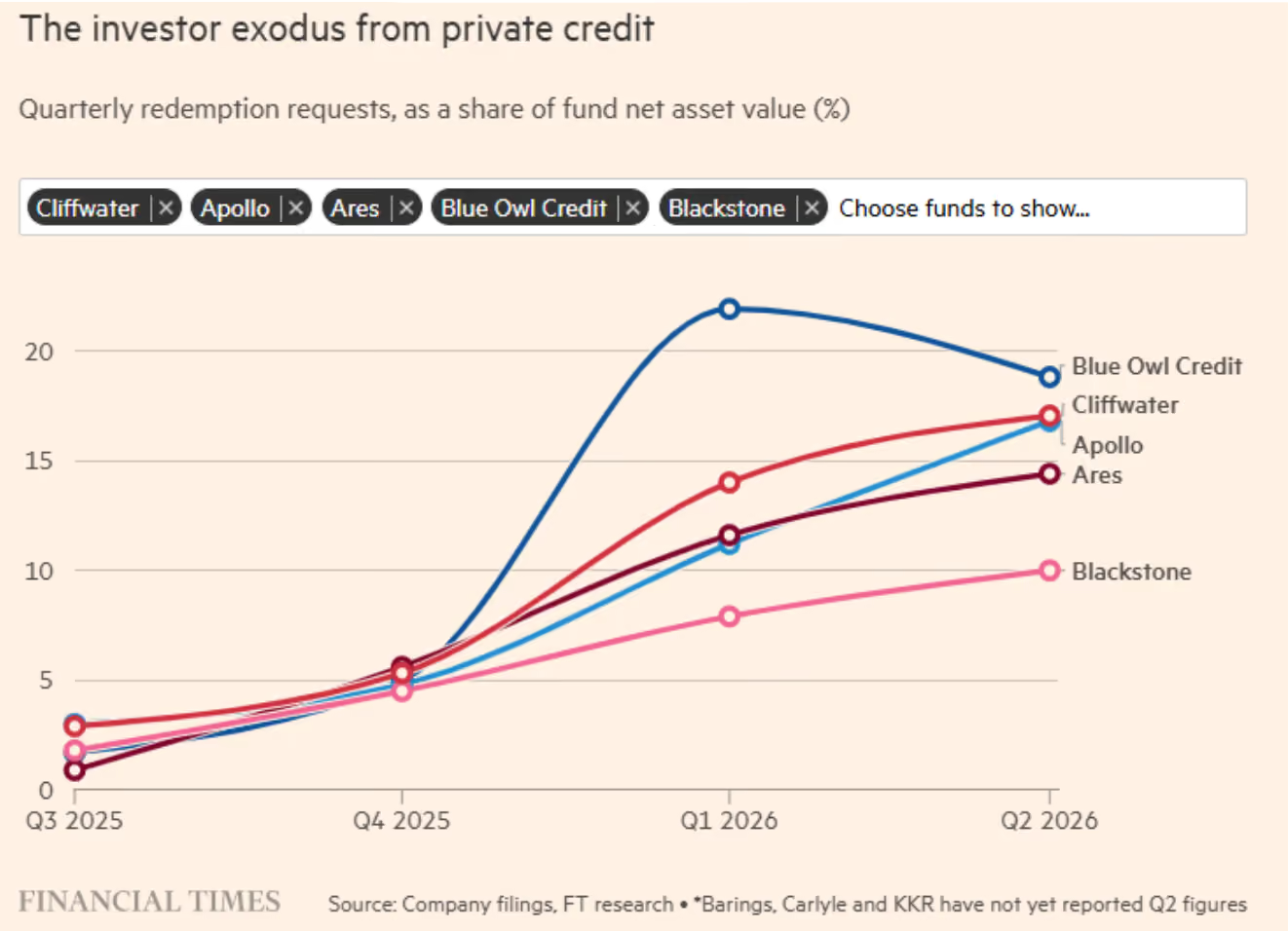
During Q2 2026, investors requested to withdraw around US$22 billion from the 20 largest semi-liquid private credit funds, marking the second consecutive quarter of elevated redemptions. On average, investors sought to redeem 8.7% of fund assets, well above the typical quarterly redemption limit of 5% of the fund’s net asset value (NAV), meaning many investors received only part of their requested withdrawal.
Blue Owl's technology-focused fund experienced particularly heavy redemption requests, while large managers including Blackstone, Ares and Apollo also saw elevated withdrawals. The sell-off has been driven by concerns over a handful of corporate defaults, private credit's exposure to software companies amid AI disruption, and broader questions about the resilience of the asset class.
While the headlines have been negative, they don't tell the full story.
Liquidity versus credit
The key question is whether this is a liquidity event or a credit event.
A credit event occurs when borrowers can no longer repay their loans. A liquidity event occurs when investors want to withdraw money faster than a fund can sell its underlying assets. Current conditions point to the latter, though a credit event materialising later can't be ruled out.
Semi-liquid funds hold privately negotiated loans that can't be sold quickly, and cap redemptions at around 5% of NAV per quarter. When requests exceed that, gates limit withdrawals, protecting the fund from forced asset sales at distressed prices. Recent selling has largely been retail investors reacting to valuation anxiety around software credit quality following public market volatility. Institutional investors, more familiar with the asset class, have been notably less concerned.
The fundamentals remain resilient, so far
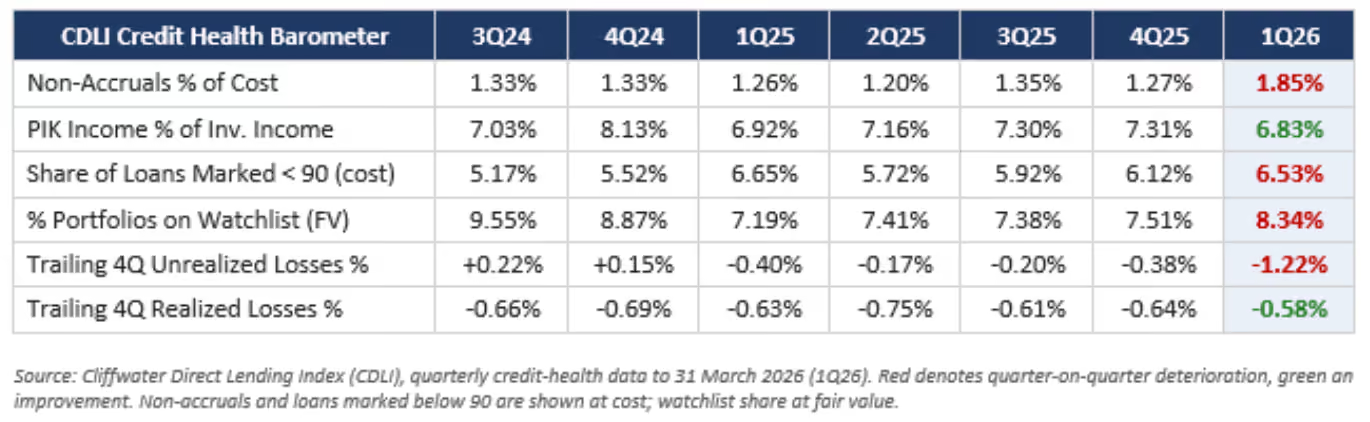
The Cliffwater Direct Lending Index returned 1.12% in Q1 2026, with realised losses of just 0.11%, below the long-term quarterly average of 0.25%. Payment in Kind (PIK) income, often a stress indicator, declined over the quarter. Non-accrual loans rose modestly to 1.85%, still below historical averages, suggesting softening rather than distress. Performance varies significantly by manager, underscoring the importance of manager selection.
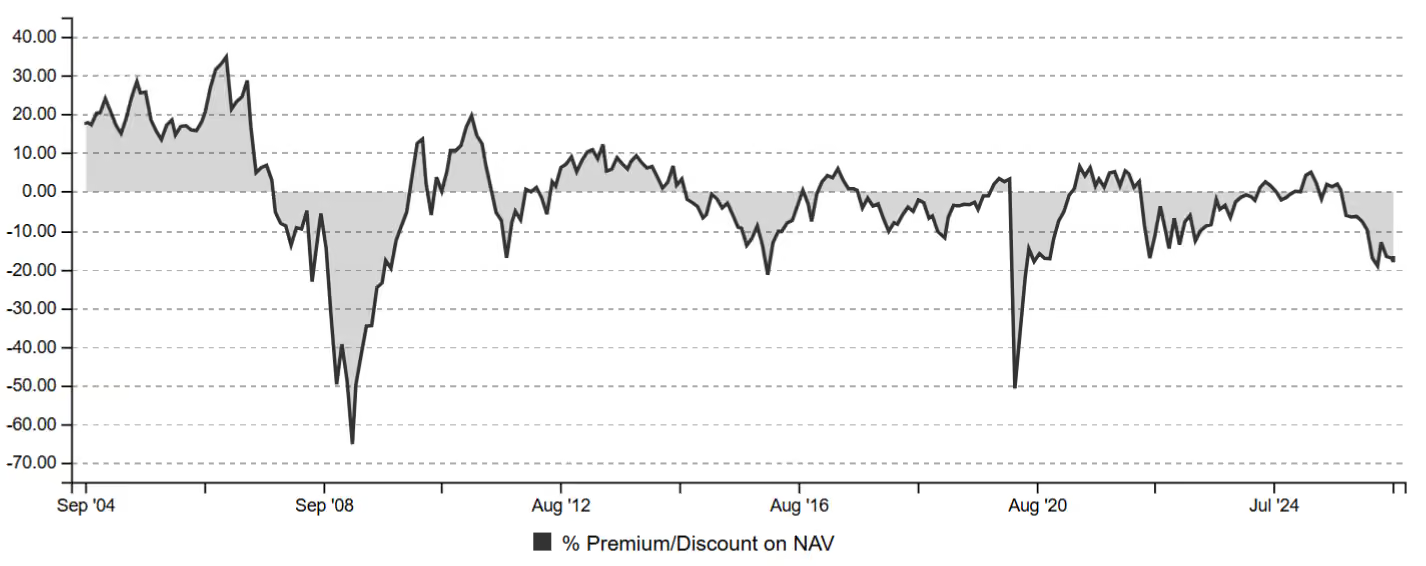
Listed vehicles have fared worse: around 80% of listed BDCs trade below NAV, which on its face suggests large credit losses ahead. But listed private credit is inherently volatile. The VanEck Global Listed Private Credit Fund, used as a BDC proxy, has had a 21.72% standard deviation since its 2024 inception, more than double the MSCI ACWI index and well above the 3.47% seen in high yield bonds.
NAV discounts and credit losses are related, but the listed market has historically overstated the severity of what eventually plays out. During the GFC, the only year the Cliffwater index posted a negative return (-6.5%), BDCs traded at an average 60% discount to NAV, a far larger reaction than the underlying loss. It's a reminder that listed pricing can lead genuine stress, but has tended to overshoot it, which is part of why drawdown structures, rather than listed vehicles, remain the standard for private credit.
Cliffwater BDC Index - % Premium/Discount to NAV
The software debate
Private credit's software exposure is a major investor concern as AI reshapes the industry. Most direct lending portfolios finance mature, cash-generative software businesses with recurring revenue, not early-stage AI startups, and most borrowers currently generate sufficient cash flow to service debt.
That said, valuation uncertainty for existing software businesses has genuinely increased, as public markets are currently demonstrating. Some borrowers may see loan value haircuts at refinancing, and some may not survive if they fail to adapt. Private equity sponsors aren't standing still, though, and are actively pushing portfolio companies to adopt AI and adjust business models in response.
Institutional investors are leaning in
Retail investors may be withdrawing capital, but institutional investors continue allocating to private credit.
North American institutional direct lending funds raised at least US$16 billion during Q2 2026, while managers including Blackstone, Ares, Apollo and BlackRock's HPS continue to launch new funds.
Today's lending environment offers wider spreads, lower leverage and stronger lender protections than in recent years, creating attractive opportunities for long-term investors.
What this means for advisers
2026 has demonstrated how semi-liquid private credit funds behave when credit concerns emerge and investors rush the exit simultaneously. Elevated withdrawals don't necessarily signal poor future performance, or mean investors should avoid the asset class entirely.
For suitable clients, private credit continues to offer attractive floating-rate income, diversification, and historically lower realised losses than many listed credit markets. AI-driven software disruption raises genuine uncertainty, but the industry has adapted through difficult environments before.
The key takeaways: set realistic client expectations, prioritise manager selection, and treat private credit as a strategic allocation rather than a tactical trade. Semi-liquid funds suit investors with long horizons who accept that capital access may be restricted during periods of market stress.